
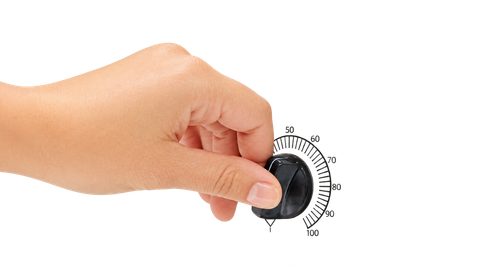
Patio Heater Control Options
Nov 12th 2026
"Nobody complains about too much heat,
as long as they can turn it down."
~ Al's Law
Why Controls Matter
A patio heater is a big heat source. With very simple controls, the heater has only two modes: full on or off. That means it's often too hot or too cold, infrequently just right. Advanced controls let you turn it up, turn it down, or have it turn itself on and off based on the time of day or the temperature. The right controls help your heating system adapt to changing temperatures, weather, and how your space is being used. Control systems for outdoor patio heaters fall into 3 basic groups:
How a controller (switch or dimmer) actually controls the heater can occur one of two ways, either inline or through an advanced relay device that allows the use of smart controls.
Controls available are also dependent on the type of patio heaters. For example, electric patio heaters can be finely adjusted using dimming controls, whereas gas patio heaters are often limited to on/off and high/low. As of 2026, both gas and electric patio heaters can use “smart controls” that integrate heater control into apps and home automation systems.
| Portable Gas |
Overhead Gas Ceramic Burner |
Overhead Gas Tube |
Electric Single Element |
Electric Dual Element |
Smart Options |
|
|---|---|---|---|---|---|---|
|
Timer |
Maybe |
Yes |
Yes |
Yes - high-amp |
Yes - high-amp |
Yes |
|
On/Off |
Yes |
Yes |
Yes |
Yes |
Yes |
Yes |
|
High/Low |
Yes |
Dual Stage |
Dual Stage |
No |
Yes |
Yes |
|
Infinite Regulator |
No |
No |
No |
Infinite |
Dual Infinite Control |
No |
|
Dimmable Heat Control |
Yes |
No |
Some (Calcana) |
Yes w/ Control Panel |
Yes w/ Control Panel |
Yes |
Design Principles
Three design principles drive every control decision:
Principle 1: Multiple heat settings are usually better than simply on/off. Patio heaters that can be dimmed are better than those that can be set to at 50% or 100% output only are better than a outdoor heaters that can only run at 100%, because you can match output to conditions. When the wind picks up, when the temperature drops, when evenings get late; adjusting the controls from low to high keeps everybody more comfortable.
Principle 2: Zone control beats single zone. A 2,000 sq ft patio rarely needs to be heated uniformly. The people at the bar, the dining area, or the lounge all want different temperatures at different times. The ability to adjust patio heater intensity independently increases satisfaction.
Principle 3: Design for the coldest conditions. Design the system to run at 50% to 60% of rated capacity for the average patio conditions. This gives you room for wind gusts and temperature drops allowing you to turn up the heat when needed.
Simple On/Off Switches and Timers
Simple On/Off Switches
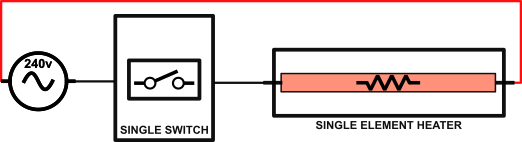
The ignition systems of most gas patio heater controls operate at 24 volts AC. For heaters at 120v or 24v, simple switches and timers work because the amperages are well within simple switch amperage limits.
Higher wattage electric patio heaters (15-25+ amps) are more complicated because they typically operate at higher voltages (208v, 240v, 277v and 480v) and draw more amps, and require on/off switches capable of handling the higher amp loads.
Timers
Timers operate as a simple on/off switch. In most gas patio heater installations a single timer can control multiple gas patio heaters because the amperage draw is low. Electric patio heaters have higher amperage draws that typically require a high-amp timer dedicated to a single electric heater. Thus, an installation with three 6,000 watt electric patio heaters would require three high-amp timers.

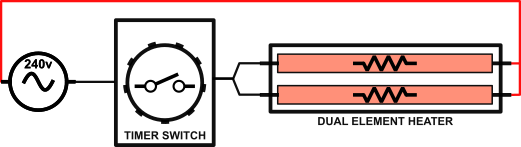
Timers also exist for portable heaters, which are installed inline on the gas line or hose.
Smart Controls
Simple WIFI/Smart switches can be used in most gas patio heater applications to control a circuit feeding the transformer, whereas electric patio heaters tend to draw too many amps for typical smart controls. As discussed below in the “Custom Control” section, solutions are available by using relays/contactor panels and stand alone high-amp WIFI switches.
Three-Position (High/Low) and Infinite Switches
Three-Position Switches
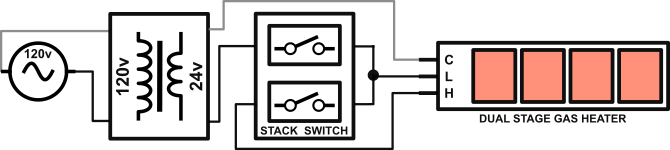
Dual element electric patio heaters or two stage gas patio heaters can use 3-position switches that allow the heater to be off, low or high.
It is recommended that gas patio heaters be controlled by a switch that ensures “low” fire remains on when the switch is set to “high” fire. A manufacturer's dual stage switch will be internally wired to provide the best switching configuration for its heaters. In most cases the configuration of the switch for a dual fire gas heater looks like this:
Heat Regulation - Infinite Switching (Cycled)
240 volt electric patio heaters can also use an "infinite switch” (also known as a infinite controller, input regulator, simmerstate or energy regulator). This type of switch is what is used in older electric stove tops. The switch closes (on) and opens (off) in cycles based on the heat setting. At low the switch cycles on for a short time, then cycles off for a longer period. At high the switch cycles on for a longer time, then cycles off for a shorter time. The heater can cycle on and off a few times per minute. If used with a heater with a quartz element this creates a cycled wave of heat, since this type of element doesn't heat or cool instantly.
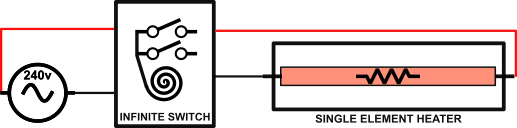
Aside from the cycling, infinite switches have an amperage limitation, which is a maximum amperage rating of 15 amps. This means that an infinite switch cannot be used on a 4,000+ watt (16.7 amps) heater. It is possible to use two infinite switches on a dual element 6,000 watt heater by wiring each 3,000 watt element (12.5 amps) to its own single infinite controller and is cumbersome when there are multiple electric patio heaters involved.
Smart Controls
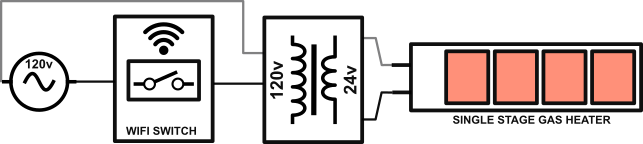
Simple WIFI/Smart switches can be used in most gas patio heater applications to control a circuit feeding the transformer, whereas electric patio heaters tend to draw too many amps for direct (inline wiring) of standard smart controls. As discussed below in the “Custom Control” section, solutions are available by using relays/contactor panels and stand alone high-amp WIFI switches. Because the WIFI switch requires 120v, it must be wired to control the circuit before the 24v transformer.
Dimmable/Variable Controls
Some gas patio heaters and most electric patio heaters are capable of dimming by regulating the fuel/electricity delivered to the heater.
Gas patio heaters, such as portable mushroom style heaters and some permanently installed tube heaters (Calcana) implement a variable valve that regulates the heat by restricting how much gas is delivered to the burner. Dimmable gas patio heaters will include dimmable controls if this is a feature offered.
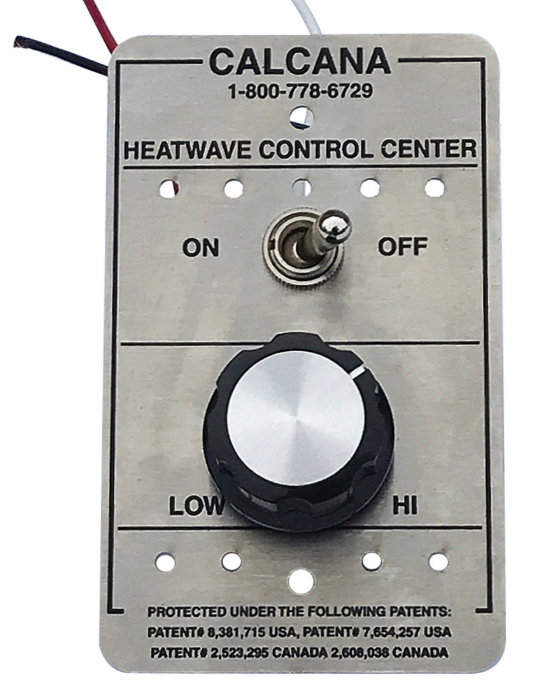
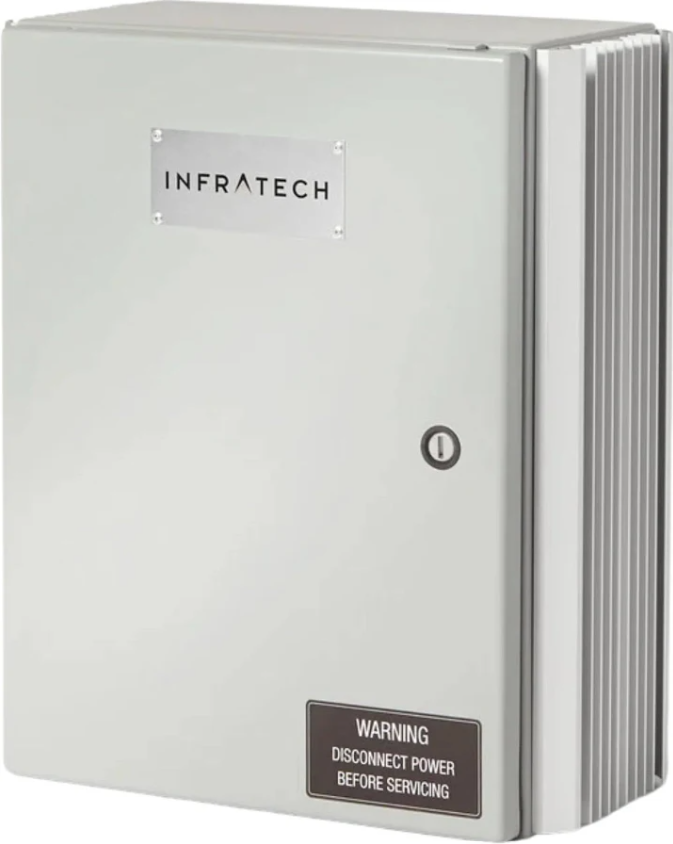
Most electric patio heaters, on the other hand, are dimmable. Safely dimming electric patio heaters requires sophisticated “Solid State Relays” (SSR) and other electrical components to electronically switch on/off the circuit powering the heater many times a second to regulate the power delivered to the heater. Because the use of SSRs require large heat sinks (see below) and sophisticated components and wiring, these features tend to be found in large “control panels” that operate as a subpanel and often sit near the main electrical panel.
Custom Control (Relay) Panels and Smart Controls
Using off the shelf Smart Controls on electric heater patio heater circuits requires a few challenges be overcome:
- The majority of smart controls are rated for only 120-240v circuits with a neutral wire (residential). In the US we don’t typically use neutral wires for 240v circuits.
- The amperage draw used by electric patio heaters will often exceed the amperage rating of smart switches which are often less than 14 amps.
- The heat generated by dimming 240v through Solid State Relays requires substantial heat sinks and air flow to dissipate the heat generated.
Smart controls for electric patio heaters traditionally required a separate control circuit to switch the high-amp circuit powering the patio heaters. There are now a few options that no longer require the extra control circuit and can now be placed inline on the high voltage power circuit. Current options for controlling heaters with standard switches and smart switches are:
|
Gas Patio Heater |
Electric Patio Heater |
|
|
Typical 120v Smart Switch (inline) |
Yes - Before Transformer |
No |
|
Hi-Amp 240v Smart Switch (inline) |
N/A |
Yes |
|
208-240v Smart Dimmable (inline) |
N/A |
Yes |
|
277-480v Smart Dimmable (inline) |
N/A |
No |
|
Relay/Contactor Panel with control circuit - Two Stage (High - Low) |
Yes |
Yes |
|
Dimmable Panel (control circuit) |
No |
Yes |
Smart (Inline) Simple Switch Controls
As discussed previously, an inline switch controls the circuit directly, opening (off) or closing (on) a switch that allows energy to flow through the circuit to the heater.
120v Smart Switch (gas) - This solution requires the smart switch to be placed before the 24v transformer and causes a single stage heater to either turn on or off. The smart switch can generally be programmed to have a routine or scene associated with it, thereby allowing the user to set a timer to automatically turn off (or on) the heater at a user defined interval.
240v Smart Switch (electric) - Prior to 2026, there were few smart switches that operated at 240v and could handle the amperage loads (25 amps) of a 6,000 watt 240v heater. As of 2026, a few options have presented themselves. Two solutions that Alfresco Heating recommends are:
Eurofase WIFI switch and WIFI Dimmer. These devices operate inline with the 240v heater circuit, using the same 240v to power the wifi radio, and pass through the 240v power to the heater. The advantage is these devices don’t require a separate control circuit because everything is contained within the WIFI box. The disadvantage is these boxes do not accommodate a separate wired physical controller, which means that everybody that uses/adjusts the heater needs to either have the app or the app is connected to another smart ecosystem (Google Home, Alexa, Home Assistant, etc.) or wireless controller that provides an additional control interface.

Some manufactures are now selling smart devices that can provide a high-amp relay switch (25+ amps) that can be used as an DIY smart (non-dimming) control system. Some of these devices also have the added benefit of allowing a separate physical control switch. This is a good option for those who don’t want to use a Contactor panel with the added control circuit.

Contactor/Relay Panels (require control circuit)
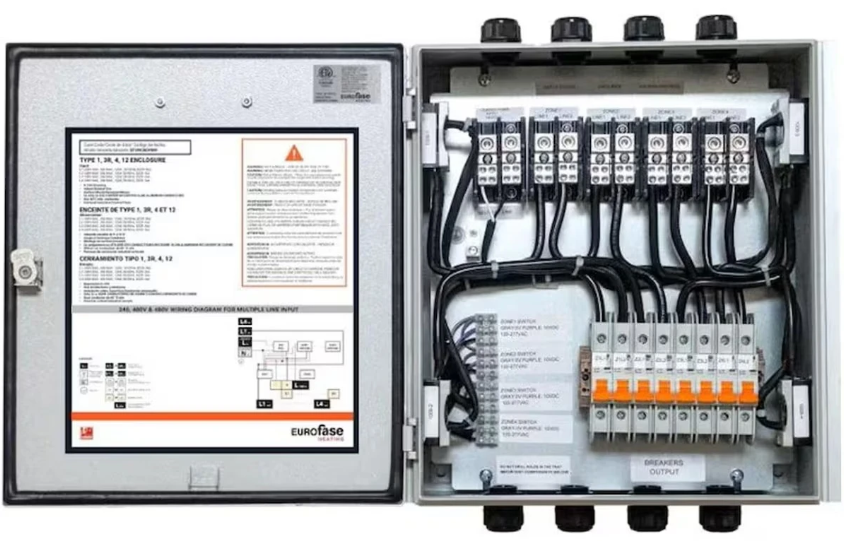
Contactor panels (aka Relay panels) are sub panels that allow the use of standard 120v voltage controls to switch higher voltage/amperage circuits by using high-amperage rated relays (contactors) to open and close the 208-480v circuit that powers the heater. Relay panels can also be used to switch the lower amperage 24v power required by gas patio heaters. These panels do not allow dimming, rather, allow on/off control of powerful electric heaters. Depending on manufacturer, panels come in 1-4 contactors as standard configurations, and custom contactor panels can have many more contactors.
24v Smart Relay Switch - Smart relays with dry contacts allow a 120v control circuit to switch on/off a 24v load circuit. Alfresco Heating can provide solutions to fully implement smart controls for gas patio heaters using these types of devices.
120v Smart Switch - Contactor Panel. Electric heater manufacturers (Eurofase, Infratech, IR Energy, and Schwank) manufacture and sell contactor panels that allow a 120v control circuit to switch on/off a high voltage load circuit (208v, 240v, 277v, and 480v).
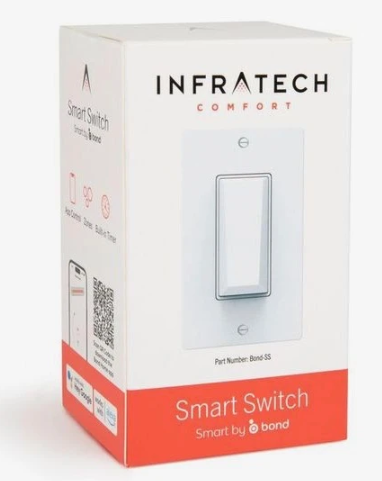
Depending on the ecosystem of the smart device used, the control circuit could be implemented at the panel and wireless controllers used on the wall, which is a good option for existing builds that cannot run the control circuits.
Dimmable Relay Panels
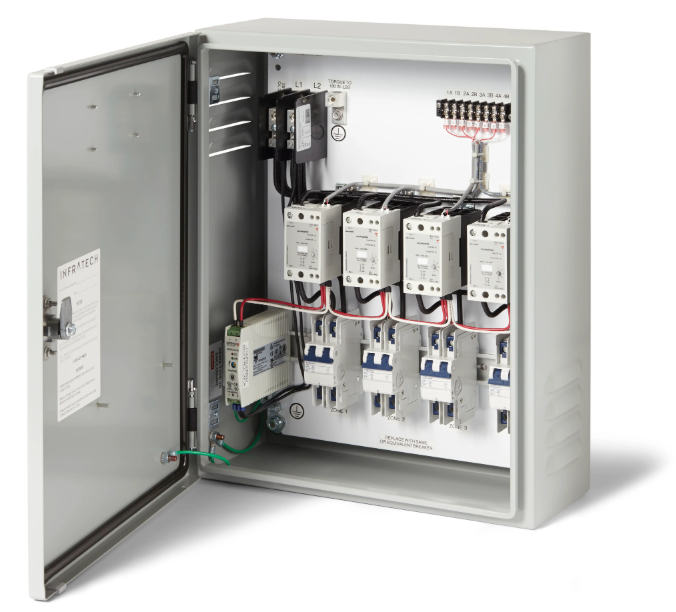
Because the electric patio heaters operate at higher amperages, standard dimming controls for lights won’t work as an inline control. A dimmable relay control panel (e.g. sub panel) with large heatsinks that supports the high load and lower control voltage circuits is required. As you can see from the diagram below, the circuits needed for dimming electric patio heaters are more involved:
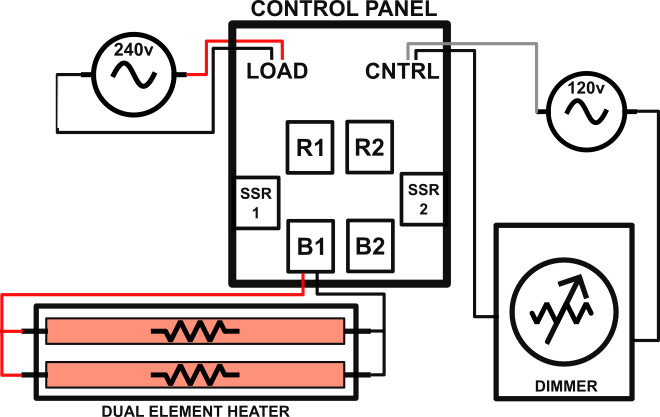
Due to the additional circuits needed, it is important to plan for the dimmable relay panel circuits as early as possible because your electrician will need to run both the load and control circuits to the panel. For new construction this process is relatively easy, but for existing retrofits the control circuits may create challenges. The good news is wireless options exist that can help you avoid running wires through the house to support the control circuit. Our patio heating experts can help you identify good options.
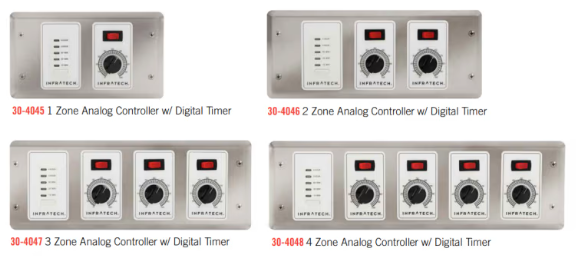
Dimmable Relay Panels with control voltages of 120v or 0-10v can use either standard dimmers or smart dimmers. The advantage of using smart dimmers is that adding “timer” functionality can be accomplished by setting a routine through the application, including Google or Alexa.
 |
 |
 |
|
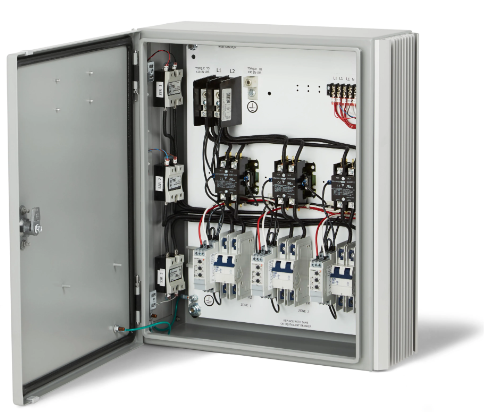
Infratech Universal Control Panel 120v Controls |
Infratech Home Managment Panel 0-10v Controls |
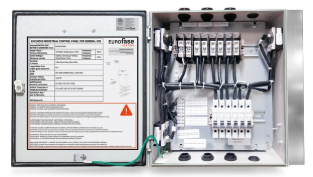
Eurofase Universal Control Box 0-10v Controls |
|
Confusion Alert As discussed, dimming heaters with standard wall dimmers (smart or simple) requires a control panel. Different manufacturers have adopted naming conventions and have design philosophies that can create confusion. For example, Alfresco Heating carries both Infratech, Schwank, and Eurofase Control Panels.
The default feed configuration is how many higer voltage (208v-480v) load circuits are coming into the box. In the case of Infratech and Schwank the default is a single large circuit that feeds the panel. For example, at 240v, four 6kw heaters will required 100 amps. Your electrician would typically install a single 125 amp circuit from the main panel to the Universal or Home Management panel. These control panels would then subdivide that large circuit into 4 small circuits using 30 amp breakers that are connected to each of the patio heaters. Eurofase takes a different approach as its default configuration by having the electrician bring multiple feeds that are sized correctly (e.g. 20 amp or 30 amp) for the heaters from the main panel to the Triac/Universal Control Panel.
|
Infratech also offers a proprietary Dimmable Relay Panel called a “Solid State” relay panel. This panel uses a proprietary controller that operates at 0-12v dc. Alfresco Heating generally recommends this panel for commercial applications where smart controls would be unwanted.
Frequently Asked Questions About Outdoor Patio Heater Controls
Can you control an outdoor patio heater with a smart switch?
Yes, most gas and electric patio heaters can be controlled with smart switches. The exception may be gas patio heaters with variable controls.
Can you dim an electric patio heater?
Yes, most electric patio heaters support variable heat control using solid state relays (SSR). As of 2026, the two primary devices are: (1) control panels and (2) WIFI dimmer box.
What is the difference between an on/off switch, a high/low switch, and a dimmer?
An on/off switch provides two settings: full power or off. A high/low (3 way) switch allows a compatible heater to operate at low and high. A dimmer or variable controller provides more adjustable heat output.
Can you put multiple patio heaters on one timer?
Yes, Multiple gas patio heaters can be controlled by a single timer because the control circuits draw relatively little current allowing a single timer to open/close the control circuit for multiple gas patio heaters. Electric heaters will require the use of a contactor panel because the .
What is a relay or contactor panel for patio heaters?
A relay or contactor panel allows a lower-power control circuit to switch a higher-voltage, higher-amperage circuit that powers an electric patio heater. This makes it possible to use lower voltage (120v or 0-10v) wall switches, timers, or smart-home controls without routing the heater's full electrical load through a standard smart switch. Relay and contactor panels generally provide on/off control rather than variable dimming.
Can gas patio heaters have adjustable heat settings?
Yes, some gas patio heaters offer adjustable heat settings. Depending on the model, controls may provide on/off operation, high/low heat, or variable heat output through a gas valve. Some permanently installed gas tube heaters also offer variable heat control. Check the manufacturer's specifications to confirm which controls are available for your heater.
Can outdoor patio heaters work with Alexa or Google Home?
Yes, some outdoor patio heater control systems can integrate with smart-home platforms such as Amazon Alexa or Google Home. Integration depends on the specific Wi-Fi switch you use.
Can one control system operate multiple patio heating zones?
Yes, a patio heating system can be designed with multiple independently controlled zones that may include a single heater in each zone or multiple heaters in a zone.